Garden Tails
The Real Resistance: Ferns
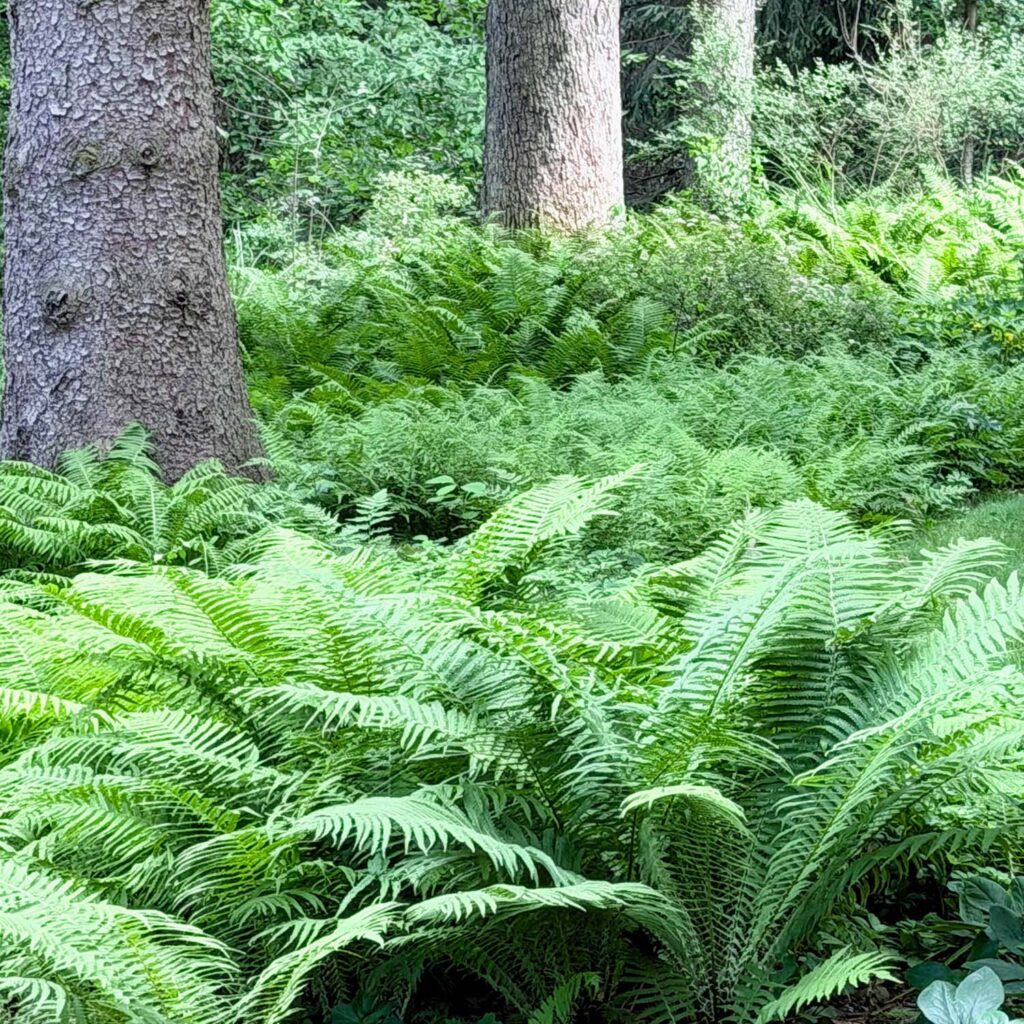
The Bloomin Fool’s compost pile is littered with the expensive remains of “pest-resistant” hostas, astilbes, and shade perennials. Hoping to fill the dark, damp corners of his Western Pennsylvania yard, he meticulously tucked these nursery-recommeded treasures into the soil, only to watch local white-tailed deer treat his shade beds like a late-night salad bar.
It was a costly lesson in regional wildlife behavior: a commercial plant tag is merely a polite suggestion, and a hungry animal doesn’t read. If forage is scarce, foraging deer, rabbits, and groundhogs will happily taste-test expensive shade investments down to the bare roots, leaving the gardener holding nothing but an empty plastic pot and a ruined budget.
That is why ferns have established themselves as the ultimate structural defense force for shaded landscapes. Unbothered by commercial nursery hype, these ancient plants rely on millions of years of evolutionary armor—combining tough, fibrous textures with unpalatable chemical compounds that Pittsburgh’s ravenous wildlife herds actively avoid. From the towering plumes of the native Ostrich Fern to the spreading, sweet-scented carpet of Eastern Hay-Scented Fern, this shade-loving coalition stands completely unbothered, creating an lush, evergreen-accented sanctuary where destructive pests refuse to dine.
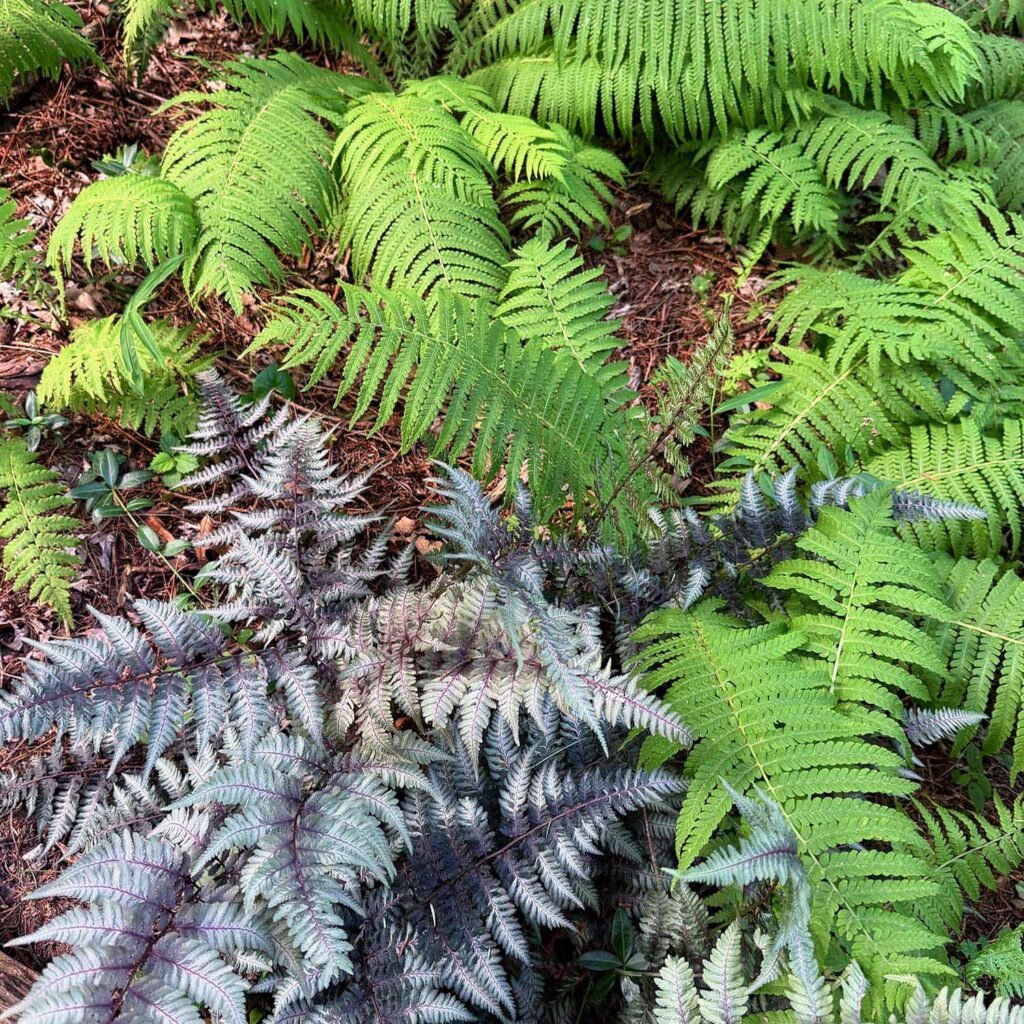
A colorful, pest-proof planting of silvery-purple Japanese Painted ferns alongside green Ostrich and New York ferns in Western PA.
You do not need an exclusive designer invitation to find these survivors, either. The Bloomin Fool has sourced his ferns across the entire retail spectrum—from specialized shade orders to quick container pick-ups at local home centers and neighborhood nurseries, while some native varieties simply arrived on their own, reclaiming their ancestral ground. No matter where they are bought or found, the raw genetics of these baseline species remain bulletproof.
The academic experts back up this local field data completely. The Penn State Extension Master Gardener program officially indexes native ferns across their databases, specifically recommending them for Pennsylvania shade gardens and wooded hillsides due to their remarkable ability to stabilize sloped soils, tolerate heavy clay, and thrive in damp, low-light conditions where other ornamental plants quickly falter.
Plus, these ancient fronds have the added feature of performing beautifully as a maintenance-free groundcover during prolonged, wet spring spells and humid summer months. The only real difficulty or common fern problem the Bloomin Fool has ever encountered with these varieties is the occasional late-season tattering of the delicate fronds during intense, dry summer heatwaves. Because chemical intervention is useless and completely unnecessary, the Bloomin Fool’s counter-strategy relies strictly on tactical sanitation. By clearing away the dead, collapsed fronds in late winter to make room for the tightly coiled fiddleheads of spring, he keeps the planting beds clean and ready for the next seasonal invasion. Even when dealing with the most oppressive Pittsburgh humidity and dense clay soils, this ancient coalition refuses to buckle, proving year after year that it has the stamina to survive the worst of the garden wars.
To verify regional horticultural data, explore local plant clinics, or research further science-based gardening strategies for Western Pennsylvania, visit the official Penn State Extension Master Gardener Program homepage.
View additional plants that the Bloomin Fool has found worthy of the Real Resistance title from the list below.