A Garden Tail: The Real Resistance —
Tickseed Coreopsis
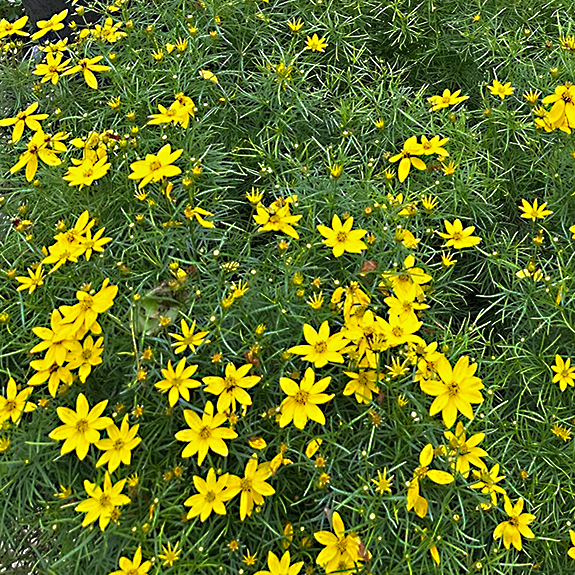
The Bloomin Fool has spent many an hour browsing catalogs and examining nursery tags in local garden centers in search of that special designation: “Deer Resistant.” Feeling confident, he plants each new find with absolute care—mulching, fertilizing, and watering meticulously—only to wake up the next morning to find his prize chewed clean to the ground.
It was a hard lesson to learn, but “Deer Resistant” is not “Deer Proof.” To the ravenous wildlife population roving Western Pennsylvania, that retail nursery label is merely a suggestion, if not an outright invitation. A hungry deer, a determined groundhog, or a passing rabbit does not care about a marketing tag or a gardener’s high hopes; if they are hungry enough, they will sample almost anything once, often leaving a freshly planted investment completely decimated by morning.
That is precisely why Coreopsis lanceolata has earned its place in the permanent ranks of the Real Resistance. Decades of actual field testing in the rugged soil of Western PA have proven that this baseline native species does not rely on retail tags for protection—its natural textures and chemistry are genuinely respected and avoided by Mother Nature’s foraging army.
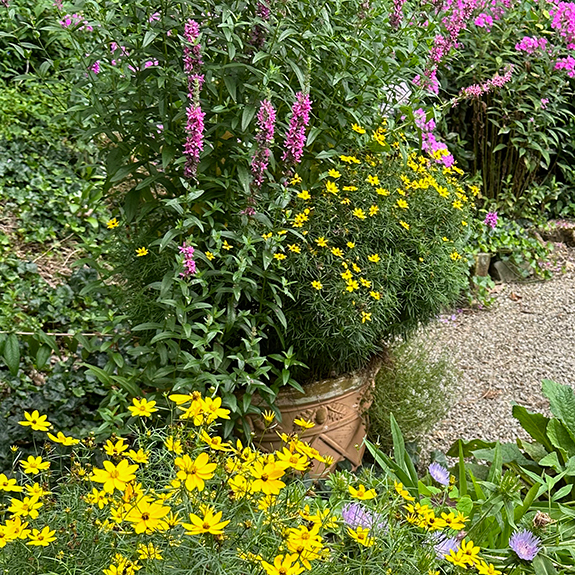
Native Coreopsis captured on video blooming amidst a diverse mix of companion plants in the garden of the Bloomin Fool.
You do not need an exclusive designer invitation to find this survivor, either. The Bloomin Fool has sourced his plants across the entire retail spectrum—from specialized orders through Wayside Gardens and White Flower Farm to quick flat pick-ups at the local Lowe’s, Home Depot, and neighborhood nurseries. No matter where it is bought, the raw genetics of the baseline species remain bulletproof.
The academic experts back up this local field data completely. The Penn State Extension Master Gardener program officially indexes Coreopsis lanceolata across their native databases, specifically recommending it for Pennsylvania meadows and wildlife habitats due to its remarkable ability to withstand hot, droughty sites and poor soils while sustaining native songbirds with its autumn seed heads.
Plus, this native wildflower has the added feature of performing beautifully as a drought-tolerant perennial during prolonged, dry summer spells. The only real difficulty or common coreopsis problem the Bloomin Fool has ever encountered with this variety is a late-season infestation of foliar nematodes. They swim up the stems during wet spells, leaving unsightly, angular black spots on coreopsis leaves and lower foliage. Because standard chemical insecticides or store-bought garden sprays have absolutely no effect on these microscopic hidden pests, the Bloomin Fool’s counter-strategy relies strictly on tactical sanitation. By switching to targeted base watering with a soaker hose to keep the leaves dry and completely removing and destroying the infected stems in the autumn, he ensures the pests cannot overwinter. Even when dealing with these uninvited microscopic guests, this native powerhouse refuses to buckle, proving year after year that it has the stamina to survive the worst of the garden wars.
To verify regional horticultural data, explore local plant clinics, or research further science-based gardening strategies for Western Pennsylvania, visit the official Penn State Extension Master Gardener Program homepage.
View additional plants that the Bloomin Fool has found worthy of the Real Resistance title from the list below.